


3. Water Resources & Sustainable Solutions
Water remains one of the most important factors for the future development of Tharparkar. Based on our field assessments, groundwater resources can be accessed through deep boring systems of up to approximately 200 to 300 feet in suitable locations.
This presents significant opportunities for:
- Agricultural irrigation systems
- Community water supply projects
- Solar-powered water infrastructure
- Water storage and distribution facilities
- Water treatment and filtration systems
Many villages are centered around Masjids, which serve as gathering points for surrounding communities. These locations provide ideal opportunities for establishing community-based water facilities capable of serving residents from multiple nearby settlements.
4. RO Plants & Clean Water Infrastructure
In many areas of Tharparkar, groundwater contains very high Total Dissolved Solids (TDS), often reaching up to 2,000 ppm or more due to naturally occurring salts and minerals. Water with such high TDS is generally not suitable for direct human consumption, as it can affect taste, reduce water quality, and may pose long-term health concerns for vulnerable individuals.
Reverse Osmosis (RO) Water Treatment Plants are one of the most effective solutions for treating high-TDS groundwater. Our RO systems significantly reduce dissolved salts, impurities, harmful contaminants, bacteria, and other unwanted substances. After purification, the water is remineralized by adding essential minerals to achieve a healthy TDS level of approximately 30–80 ppm, making it safe, refreshing, and beneficial for daily drinking.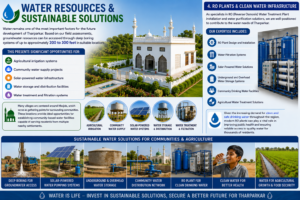
As specialists in RO (Reverse Osmosis) Water Treatment Plant installation and water purification solutions, we are committed to providing sustainable and reliable clean water systems for the people of Tharparkar. Our expertise includes the design, installation, operation, and maintenance of modern RO plants that help improve public health, reduce waterborne diseases, and ensure long-term access to safe drinking water.
Our Expertise Includes:
- RO Plant Design & Installation
- High-TDS Groundwater Treatment
- Water Filtration & Purification Systems
- Solar-Powered RO Solutions
- Underground & Overhead Water Storage Systems
- Community Drinking Water Facilities
- Agricultural Water Treatment Solutions
- Operation, Maintenance & Technical Support
Clean water is a basic human right. By implementing sustainable RO water treatment infrastructure, we aim to transform saline groundwater into safe, mineral-balanced drinking water, improving health, supporting communities, and creating a healthier future for the people of Tharparkar.
Tharparkar represents one of the most promising development opportunities in Pakistan. The region offers significant potential for:
- Agricultural
 Development
- Water Infrastructure Projects
- RO Plant Installations
- Solar-Powered Water Systems
- Community Development Programs
- Rural Investment Initiatives
With comprehensive survey data, local knowledge, technical expertise in water solutions, and a clear understanding of regional development opportunities, we welcome collaboration from investors, organizations, NGOs, development agencies, and financial institutions.
Together, we can transform fertile land into productive farms, improve access to clean water, empower local communities, and create sustainable prosperity throughout Tharparkar.